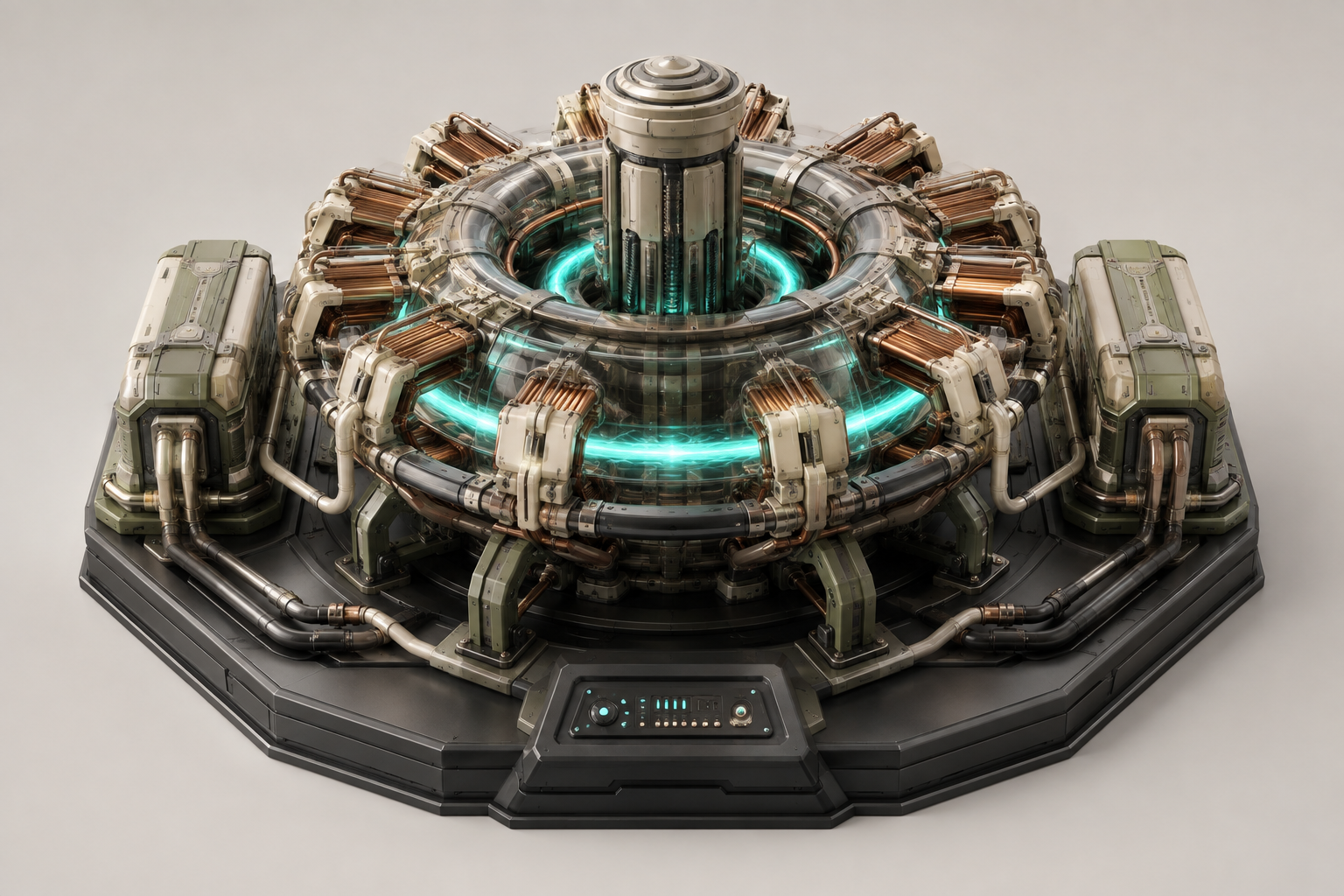
Memory in Matter
Persistent lattices reveal how physical structures retain a trace of their past.
INSTRUMENT 02 / REGENERATIVE SYSTEMS
Engineering that follows
the language of life.
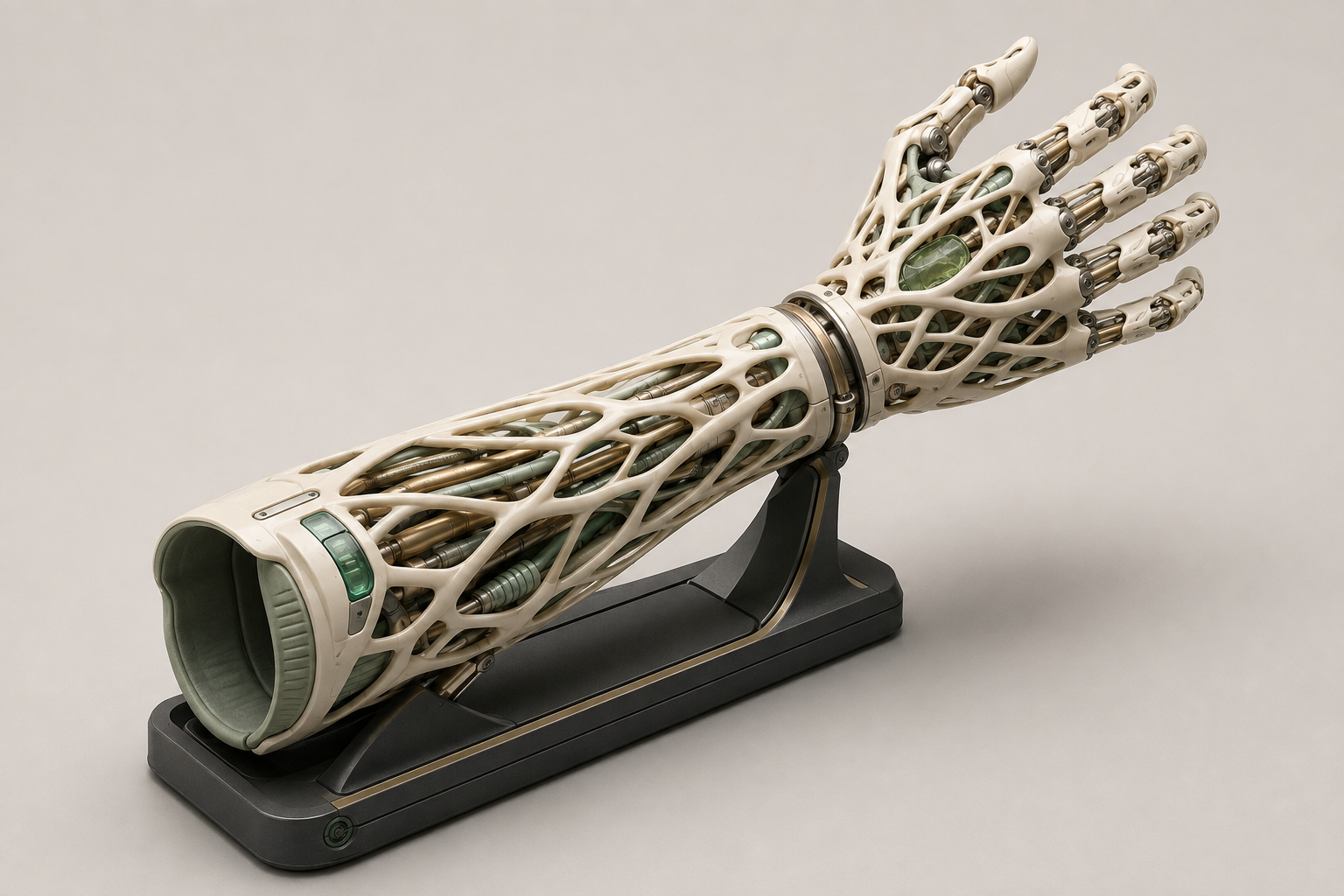
A continuous scaffold. A network of tendons. An articulated hand. Lattice Prosthetics brings molecular fabrication and living-system research together in a form that is as deliberate in its openings as in its structure.
Molecular precision meets regenerative biology. A living-compatible structure shaped around movement, support, and the person who uses it.
Look beneath the surface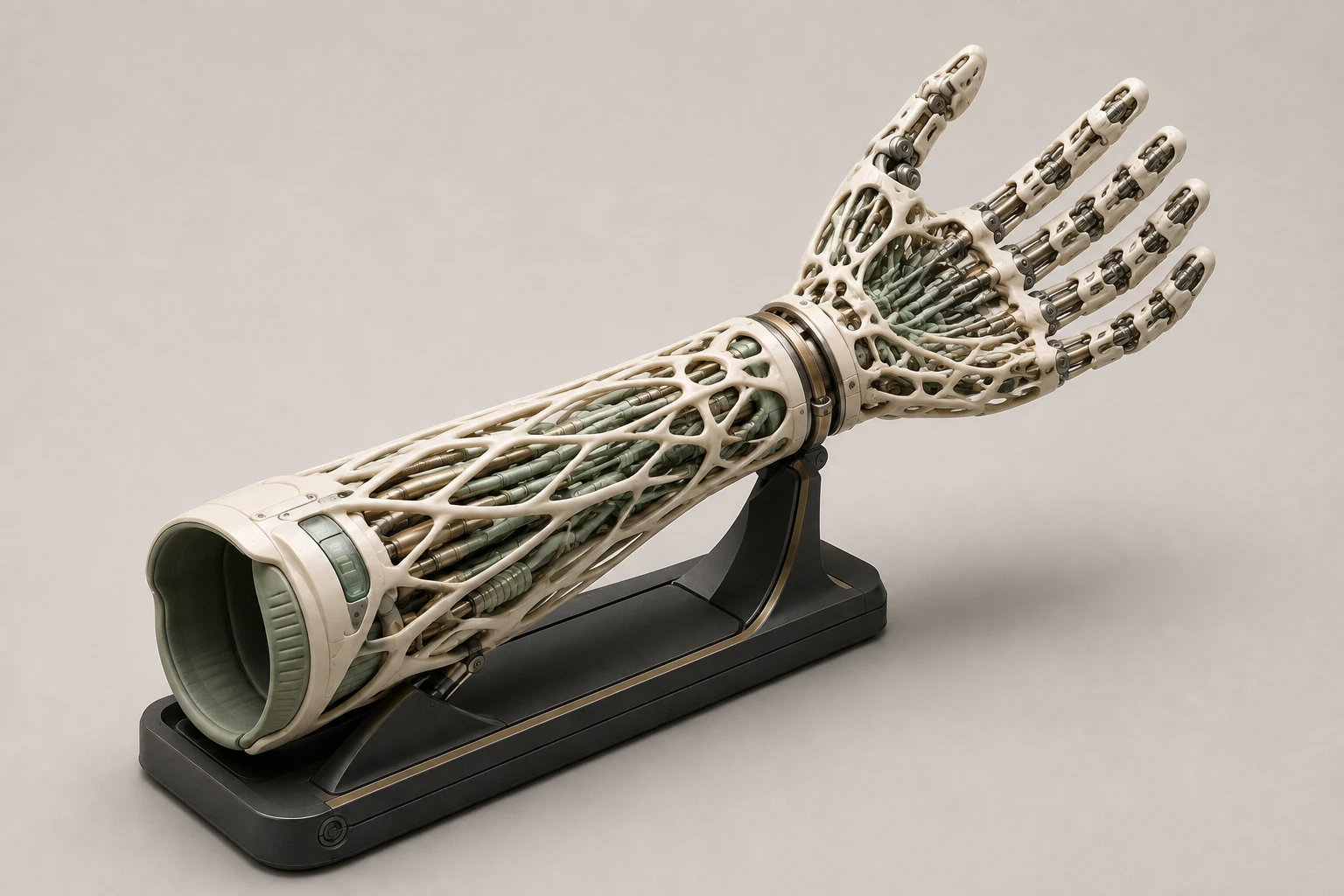
MATTER. PURPOSEFULLY ARRANGED.
Separate the outer scaffold from its supporting systems. Follow the path from the lined socket, through the tendon chassis and articulated wrist, to the intricate structure of the hand.
Meridian’s memory lattices opened a path to fabrication at molecular scales. In the Living Systems Lab, cells offered another lesson: repair and shape could emerge through local cooperation. Lattice Prosthetics grew from the meeting of those two discoveries.
Persistent lattices reveal how physical structures retain a trace of their past.
Fabrication places useful structures with finer control.
Biological systems offer insight into shape, signaling and repair.
Living-compatible structures unite precision fabrication and regenerative biology.
“Precision assembly puts useful structures where conventional manufacturing leaves an average.”
MERIDIAN RESEARCH NOTES / MATERIALS
Investigate structures shaped around individual needs through molecular assembly and independently reviewed models.
Study living-compatible scaffolds alongside biological monitoring and regenerative-system validation.
Advance from an initial structure toward monitored, regenerative and predictive generations.